Friday, June 23, 2017

Mesa Verde National Park

On our return trip from Arizona this spring, we stopped for a couple days at Mesa Verde National Park in Colorado.  This park offers a look into the lives of the Ancestral Pueblo people who made this area their home during a 700 year time span (AD 550 to 1300).


Archeological sites, including some 600 cliff dwellings, are among the best preserved in the United States.  Self-guided and ranger-guided tours are available.


Thursday, August 4, 2016

Glacier National Park: East Glacier


Our final trip into Glacier Park was to the Two Medicine area.  Two Medicine offers hiking and camping, and another clear blue lake.  We stopped to see Running Eagle Falls, accessible by a short walk into the woods and across a small stream.

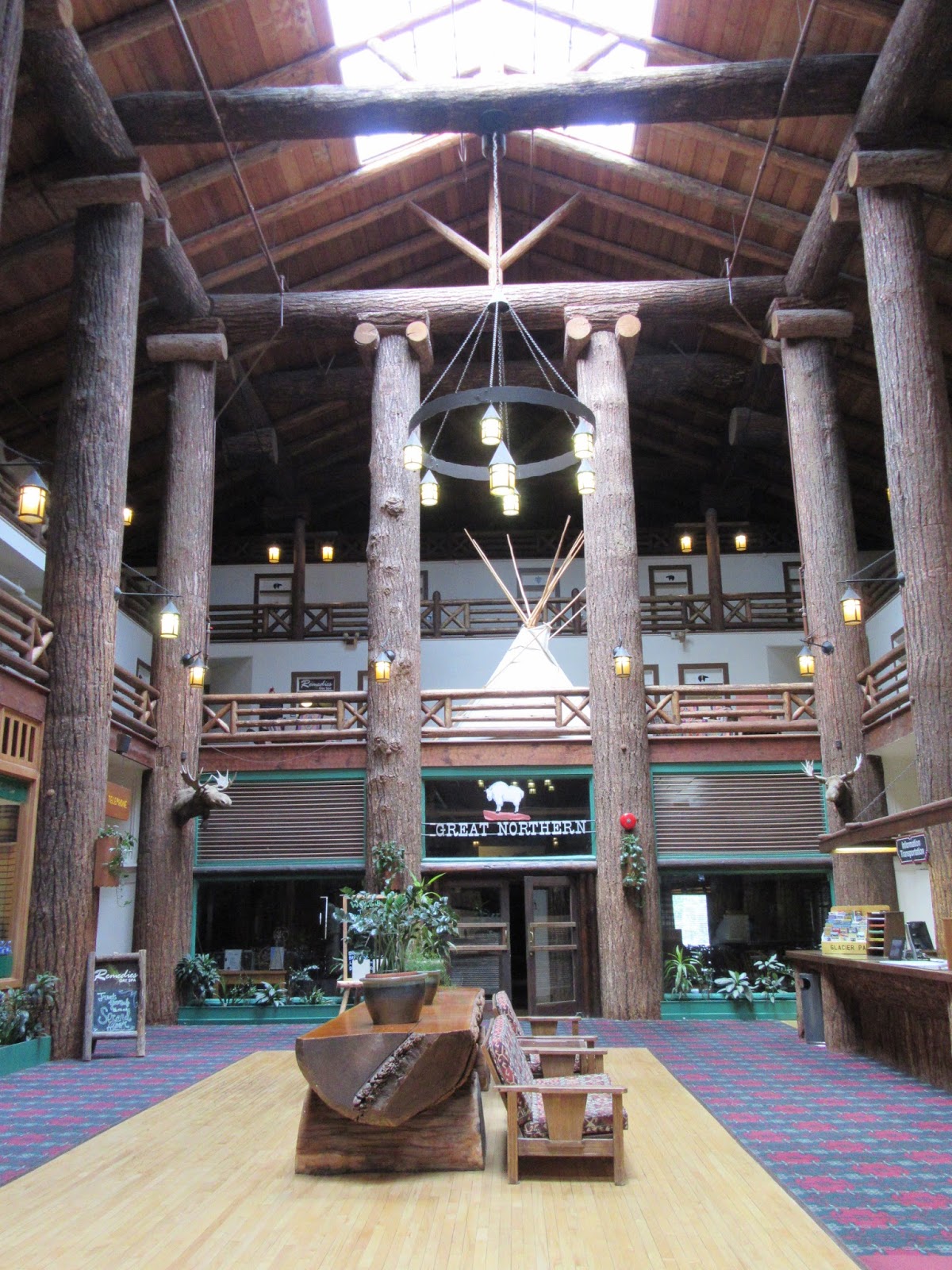
On the way out we stopped in East Glacier to see historic Glacier Park Lodge.  This lodge was built in 1912 by the Great Northern Railroad (GNR) company.  GNR financed the building of many hotels and lodges in Glacier Park as part of their "See America First" campaign.  East Coast and Midwest travelers were invited to hop on the train and come visit the west, assuring that fine lodging, dining, and travel would be available.  

This lodge is best known for the massive Douglas fir pillars used in it's construction.


Glacier National Park: Many Glacier


Another day we drove to the north-east corner of the park to Many Glacier.  This area is a favorite for hikers, since many trails leave from there. Swiftcurrent Lake is the central point and site of historic Many Glacier Hotel.  This century old Swiss influenced hotel perches on the lake shore and faces a jagged skyline of rocky peaks.  There are fewer trees on this side due to less moisture.


.


Just as we drove in we got to see a bear!  It was in the bushes feasting on berries, not too far off the main road.

Glacier National Park: West Glacier

In 1910 Glacier National Park was established as our country's 10th national park.


We first entered the park at West Glacier and followed Going to the Sun Road, 52 miles of two lane highway that winds through the heart of Glacier Park and exits on the east side at St. Mary.  Going to the Sun was completed in 1923 after 10 years of engineering.  Stone work on the bridges, tunnels, guard rails & retaining walls artfully blends into the adjoining hills.  In recent years renovations have added more turn outs and scenic overlooks.

The Road starts gently in the Lake McDonald valley, winding past the largest lake in Glacier: 9 miles long, 1.5 miles wide, and nearly 500 feet deep.  McDonald Lodge, built in 1913, is now on the historic buildings registry, and still serves guests in it's hotel rooms and cabins.

From the lake, Going to the Sun climbs to "The Loop".  The only switchback on the road, it makes a full U-turn, then the road climbs at a steady 6% grade around curves and bends until it reachs Logan Pass.  At 6640 feet, this is the highest point accessible by road (many mountain peaks are much higher!)

At Triple Divide Peak, which straddles the Continental Divide, water flows in three directions: toward the Pacific Ocean, Hudson Bay, and the Gulf of Mexico.

Coming down the east side, one gets a chance to see Jackson Glacier, one of a few still present in the park.  


Then it's on to St Mary valley, where grassy meadows provide food for elk and other animals.  To complete the round trip and get back to our campground on the west side, we took highways 89 and 2 back to West Glacier.

Wednesday, August 3, 2016

On the Way to Glacier National Park

On July 18th we left Wyoming and headed north on I-90 into Montana.  We followed the Yellowstone River to Bozeman; crossed the Continental Divide near Butte; turned south at Missoula on hwy 93 and into the Bitterroot National Forest region.  The Bitterroot River wound it's way through the forest and towns.


Near Stevensville, we stopped to visit relatives on their Montana farm. We parked in the farm yard and camped there a couple days.  Some of their cattle came to pose for pictures one afternoon.

Leaving Stevensville we headed north again, through Missoula and up hwy 93 to Flathead Lake.  Flathead Lake is one of the largest freshwater lakes west of the Mississippi. We drove around the east side of the lake, to see the Flathead cherry orchards. Flathead cherries were advertised at grocery stores and little fruit stands along the way, so we stopped to buy some...they are Bing cherries, and were quite good. Another fruit in season was huckleberry, which they used for pies, ice cream, jam, jelly, etc. (kind of like blueberries).

Our destination was a campground in Kalispell, MT.  It was from Kalispell that we started our tour of Glacier National Park.  We would be touring Glacier Park for a week: July 22-29th.

Buffalo, Wyoming


Buffalo, WY is another western town with lots of history.  The Occidental Hotel in Buffalo, originally built in the late 1800's to serve travelers of the Bozeman Trail, has hosted many notorious guests over the years.  Butch Cassidy, the Sundance Kid, Jesse James and the Hole-in-the-Wall gang, Calamity Jane, Buffalo Bill Cody, Tom Horn, Teddy Roosevelt, President Herbert Hoover and Ernest Hemingway are only a few.


 Bullet holes in the walls and ceiling of the hotel saloon attest to the wild days in town and characters that lived there.

Both Buffalo and Kaycee, WY (just south of Buffalo) had great western history museums, with lots of stories and artifacts from the area.  The Johnson County Cattle Wars, TA Ranch gunfight, Hole-in-the Wall hideout, the Wagon Box Fight, Fort Phil Kearny, Fetterman Battlefield, Dull Knife Battle...all places and events in the history of these towns along the Bighorn Mountains.

If you are a fan of "Longmire" series on either A&E Television or Netflix, or have read novels by author Craig Johnson, the town of Buffalo may seem familiar.  Johnson loosely bases his stories on events and characters from this Wyoming town.

P.S. a bit of Wyoming trivia: according to the host at Buffalo's Visitor Center...there are more antelope in Wyoming than people! (I'd believe it too...we saw antelope every place we drove)

Sheridan, Wyoming

Sheridan, WY is a town rich with Old West history; we spent hours in the excellent museums, historic buildings, and surrounding towns and countryside.

Coal mining was responsible for growth of Sheridan County area in the late 1890's to early 1900's. Monarch, Dietz, Acme, Kooi, Kleenburn were local mining towns...now all that remains are a couple water towers, some concrete foundations, small cemeteries, and a boarded up mine shaft opening. We followed the Black Diamond Trail to visit some of these ghost towns.  As the mines closed in the 1930's, residents moved into Sheridan.

Shaft coal mining eventually brought the railroad to Sheridan.  Timber from nearby Bighorn Mountains was used for railroad ties; massive flumes were constructed to bring logs down the mountains to the rail lines being built. The railroad company bought and transported coal to larger markets in the northwest.

The Sheridan Inn grew from the need for a place for train passengers to stay. Opened in 1893, it was one of the first western hotels to feature running water and electricity.   Buffalo Bill Cody auditioned riders for his Wild West Shows from the Inn.  Another notable guest of the 1920's was Ernest Hemingway.  The Inn is also known as "House of 69 Gables" for all the gabled windows on the upper floor guest rooms.

The Bozeman Trail route ran through nearby town of Big Horn...some wagon ruts from the trail are still visible on the hills along I-90.


Also in Sheridan is King's Saddlery Museum...a collection of saddles, ropes, and western memorabilia. Craftsmen there still embellish saddles and other leather goods with fine tooling.

(Sorry for so few photos; our camera was broken during one of our outings in this area)